अथ चेतत्त्वमिमं धर्म्यं संग्रामं न करिष्यसि |
तत: स्वधर्मं कीर्तिं च हित्वा पापमवाप्स्यसि || 33||
atha chet tvam imaṁ dharmyaṁ saṅgrāmaṁ na kariṣhyasi
tataḥ sva-dharmaṁ kīrtiṁ cha hitvā pāpam avāpsyasi
atha chet—if, however; tvam—you; imam—this; dharmyam saṅgrāmam—righteous war; na—not; kariṣhyasi—act; tataḥ—then; sva-dharmam—one’s duty in accordance with the Vedas; kīrtim—reputation; cha—and; hitvā—abandoning; pāpam—sin; avāpsyasi—will incur
Translation:
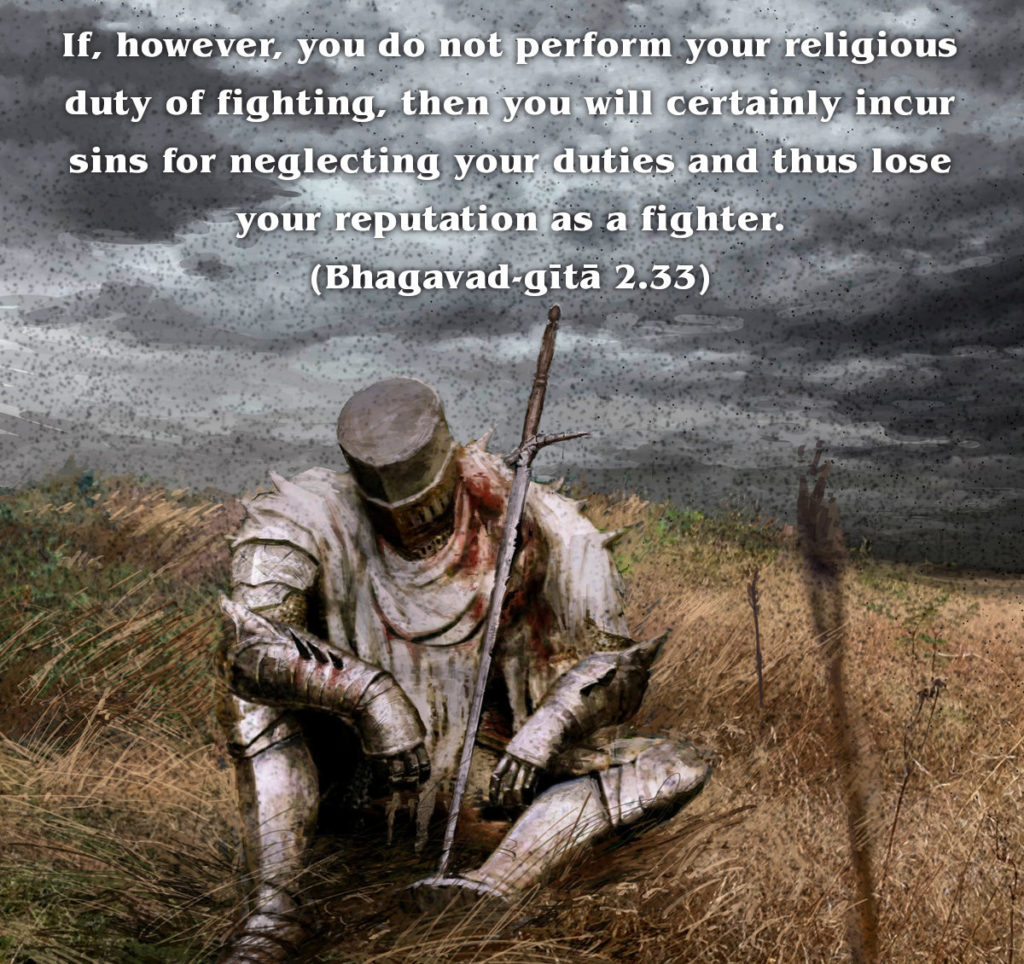
But if you do not fight this righteous war you would incur sin by abandoning your own duty, name, and fame.
Commentary:
A DRIVING FORCE TO DO DHARMA
Once, M G Ramachandran, the then chief minister of Tamil Nadu, went to meet the Sage of Kanchi. He went into the wilderness within the village, and that too in the dead of night, to avoid crowds. He was so famous that despite this, the news leaked out, and the crowd swelled by thousands eager to catch a glimpse of their hero. When he finally arrived with much difficulty, the sage, seated serenely inside a hut, said to him, “See! Just look at all these simple people and their faith in you. They have come here not to see me but for a glimpse of you. Let this be your driving force to do dharma. They are your gods. Never shirk from your duty. Whatever you do, remember them. Never, in any way, upset their belief in you.” This upadeśa held such a blessing that he continues to inspire many even after many decades of his demise. (Source: Srimad Bhagavad Gita – Elixir of Eternal Wisdom | Vol 1)